AI Animated Story Video Generator: How Doodle Shorts Are Made
The hand-drawn doodle-story format is one of the fastest-growing on Shorts. Here's what an AI generator actually does to make one, and how to judge whether a tool is any good at it.
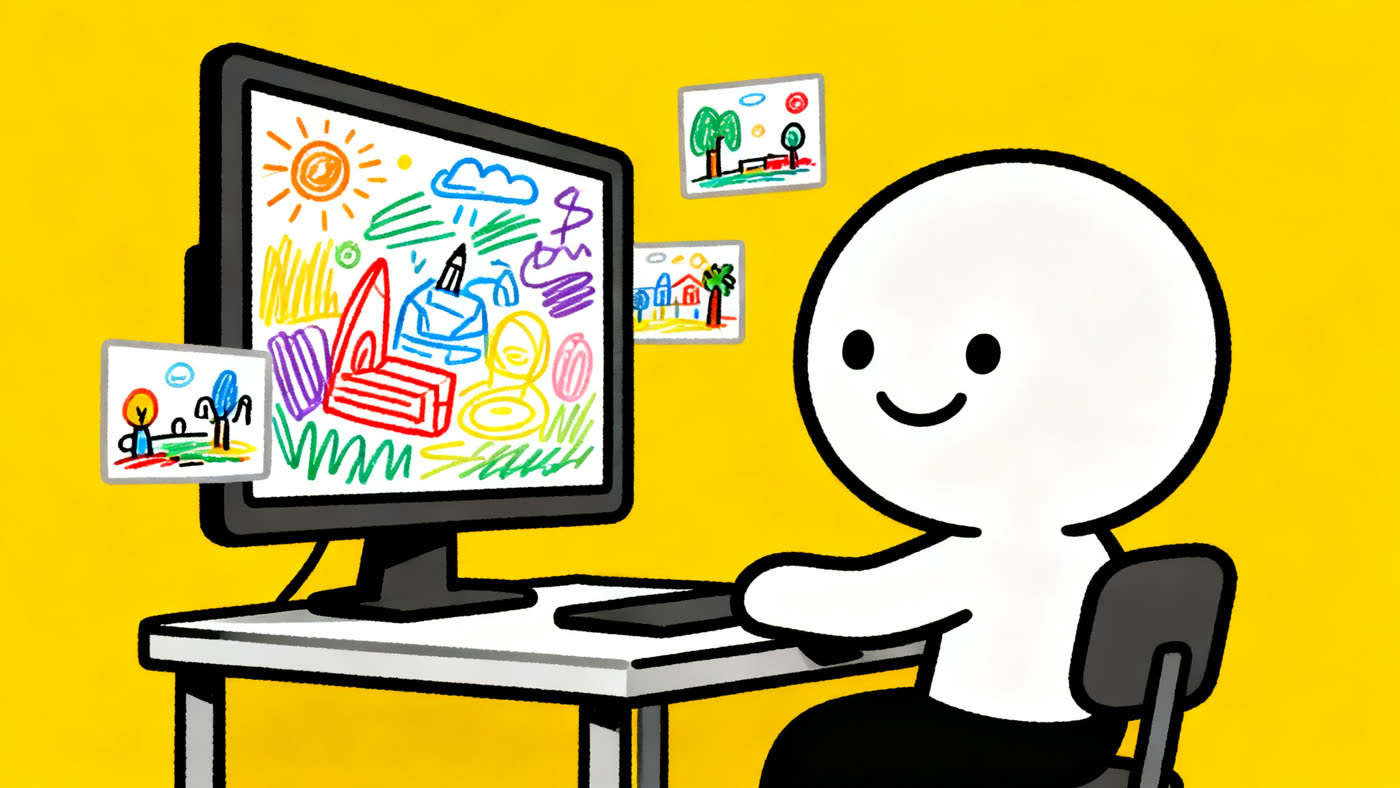
A year ago, making a cartoon explainer meant an illustrator, a storyboard, and a week of work. Now a single prompt produces a colorful hand-drawn short with a scene drawn for every sentence — the animated story format you've seen racking up millions of views on curiosity and storytime channels. This is how an AI animated story generator actually builds one, and how to tell a good tool from a gimmick. We make ShortsMade, so treat the tool bits as informed-but-biased and the format bits as portable.
What an AI animated story generator actually does
Behind the one-click button, a real generator runs a short pipeline. Each step is a place a tool can be good or bad:
- Writes the story. An LLM turns your topic into a curiosity-question title and splits the narration into beats — one idea per beat, hook first.
- Draws each beat. For every beat it generates one illustration in a consistent doodle style (thick outlines, flat bright colors, round-headed characters). This is the expensive, quality-defining step.
- Voices it. Text-to-speech narrates the script; good tools let you pick a voice and speed.
- Times and captions it. The narration is transcribed to get word timings, captions are burned in and synced to the audio, and each still gets a slow Ken-Burns zoom with crossfades so it reads as motion.
It is NOT frame-by-frame animation. Nobody animates a walk cycle — each scene is one still image, paced to the voice. That's exactly why one person can publish these daily.
Why this format works
We looked at the top-performing videos across the biggest channels in the niche, and two things separate the hits from the flops — and neither is the animation quality:
- A curiosity-question title. Not "Facts about the deep ocean" but "What lives at the bottom of the ocean where light never reaches?" The question is an open loop your brain wants closed.
- A big, slightly-eerie, universal topic. Ancient humans, the deep ocean, animals and humans, death and the brain, evolution and survival. Pick the topic well and an average execution still travels; pick it badly and a perfect one won't.
What to look for in a generator
- A style that actually holds up. Cheap image models can't keep a clean doodle look — the outlines get muddy and the characters drift. The style is the whole product; judge a tool by a real sample, not a mockup.
- Editable script before it renders. You should be able to fix the title and rewrite a weak beat before spending on images. A tool that renders a full video from one click and makes you re-roll the whole thing is wasting your credits.
- Per-scene control. If one drawing comes out wrong, you want to fix that one scene — not the entire video.
- Real caption sync. Captions timed to the actual spoken words (word-level), not an even split that drifts.
- Honest pricing. Each video generates several AI images, and images cost money. A tool should tell you what a video costs before you make it.
How ShortsMade does it
Our Animated Story tool follows the pipeline above with the controls that matter: pick a viral-tested topic (ancient humans, deep ocean, animals & humans, death & the brain, evolution & survival), type your own, or hit "Surprise me." The AI writes a curiosity-question title and the beats, and every line is editable before anything renders. Each beat becomes a premium doodle illustration; you pick the voice, speed, caption style and font, and background music. Captions are synced to the real narration word-for-word, and a multi-track editor lets you fix any single scene. There's also a recurring-character mode that keeps one doodle protagonist consistent across every beat, so the video feels like a story with a narrator rather than a slideshow.
9:16 shorts only right now — no long-form. No auto-posting or recurring series: you generate and download, then post yourself. And it's a cartoon by design, so it's the wrong tool if you need photorealism. It's free to start with credits included; paid plans cover higher volume.
What it costs to make one
Being upfront, since most tools aren't: the AI illustrations are the real cost — one per beat. A 30-second animated story is about five scenes, priced so a free account can make one, with longer videos costing more because they have more scenes to draw. If a generator won't show you the cost before you hit render, assume it's because the number isn't flattering.
Animated story vs. the other faceless formats
The two dominant faceless-story formats win in different places. Reddit stories run a narrated thread over gameplay footage — great for drama, confessions, revenge arcs. Animated stories illustrate every beat — great for curiosity, education, and anything where *seeing* it drawn adds something. If your idea is a personal drama, narrate it over gameplay; if it's "how does X actually work," draw it. For the wider tool landscape, our honest ranking of faceless video generators sorts tools by the job they're shaped for.
What is an AI animated story video generator?+
A tool that turns a topic into a short narrated video where each beat of the script is illustrated as a cartoon scene — the script, the drawings, the voiceover, and the synced captions are all generated for you.
Do I need to know how to draw or animate?+
No. The drawing is generated in a consistent style and the 'animation' is pacing (Ken-Burns zoom + crossfades on stills), not frame-by-frame work.
How long should an animated story short be?+
30–60 seconds for Shorts, Reels, and TikTok — roughly five to eleven beats. Long enough to answer the question, short enough to hold retention to the end.
Can I keep the same character across the whole video?+
Yes — recurring-character mode locks one protagonist across every beat via a reference image, so it reads as one story rather than a slideshow of unrelated scenes.
Can these videos be monetized?+
Yes. An original script, a coherent channel identity, and real editing choices are what monetization policy looks for — AI being the drawing tool isn't the problem. Re-uploading the same template on a loop is.
Pick a topic or let it surprise you — your first animated story short is a couple of minutes away.
Make an animated story free